|
 |
|


text translation service for 25 worldwide languages
Today is
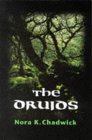 |
The quotations on this page are those used by Nora K. Chadwick, from her works Druids” published by the University of Wales Press, Cardiff, Wales, 1966: |
Ammianus
Marcellinus, (c. A.D. 330-91 or later),
v. 28:
“The druids, who were of a loftier intellect, and bound by the rules
of brotherhood as decreed by Pythagoras’ authority, were exalted by investigations
of deep and serious study, and despising human affairs, declared souls
to be immortal.”
Pomponius Mela (fl. c. A.D. 43), “De Chorographia”, Libri Tres, [Ed. Carolus Frick, Liepzig, 1880 iii. 2]:
“They have, further, their eloquence and their Druids, teachers of
wisdom, who profess to know the greatness and shape of the earth and the
universe, and the motion of the heavens and of the stars and what is the
will of the gods.”
Latin text of above:
“Habent tamen et facundiam suam magistrosque sapientiae druidas. Hi terrae mundique magnitudinem et formam, motus coeli ac siderum, et quid dii velint scire profitentur.”
Pomponius Mela (fl. c. A.D. 43), “De Chorographia”, Libri Tres, [Ed. Carolus Frick, Liepzig, 1880 iii. 2]:
“They teach many things to the noblest of the race in sequestered and
remote places during twenty years, whether in a cave or in secluded groves.
One of their dogmas has become widely known so they may the more readily
go to wars: namely that souls are everlasting, and that among the shades
is another life.”
Latin
text of above:
“Docent multa nobilissimos gentis clam et diu, vicenis annis, aut in specu
aut in abditis saltibus. Unum ex his quae praecipiunt in vulgus effluxit,
videlicet ut forent ad bella meliores, aeternas esse animas vitamque alteram
ad manes.”
Tacitus, “Annals”, xiv., 30:
“A force was next set up over the conquered, and their groves (i.e.
of the conquered population of Anglesey), devoted to cruel superstitions,
were cut down. They deemed it a duty, indeed, to cover their altars with
the blood of captives, and consult their deities through human entrails.”
Latin
text of above:
“Praesidium posthac impositum victis excisique luci saevis superstitionibus
sacri; nam cruore captivo adolere aras et hominum fibris consulere deos
fas habebant.”
Dio Chrysostom, (c. A.D.40 – after 112), Oratio xlix:
“The Celts appointed druids, who likewise were versed in the art of
seers and other forms of wisdom without whom the kings were not permitted
to adopt or plan any course, so that in fact it was these who ruled and the
kings became their subordinates and instruments of their judgement, while
themselves seated on golden thrones, and dwelling in great houses and
being sumptuously feasted.”
Lucan, (c. A.D.39-65), “Pharsalia” i. 441ff:
“You also, ye poets, who in your panegyrics hand down through the ages
brave souls cut off in battle, free from apprehension have ye bards poured
forth your wealth of song. And you, ye druids, having laid aside your
arms, have returned to your barbaric rites and sinister mode of worship.
– To you alone it is granted or withheld to have knowledge of the gods
and the powers of heaven, you who dwell in deep woods in sequestered groves.
Your teaching is that the shades of the dead do not make their way to
the silent abode of Erebus or the lightless realm of Dis below, but that
the same soul animates the limbs in another sphere. If you sing of certainties,
death is the centre of continuous life. Truly the peoples on whom the
Pole star looks down are happy in their error, for they are not harassed
by the greatest of terrors, the fear of death. This gives the warrior
eagerness to rush upon the steel, a spirit ready to face death, and an
indifference to save a life which will return.”
Hippolytus, (c. A.D. 170-c. 236), “Philosophumena”, i. 22:
“The druids among the Celts having profoundly examined the Pythagorean
philosophy, Zalmoxis, a Thracian by race, the slave of Pythagoras, having
become for them the founder of this discipline, he after the death of
Pythagoras, having made his way there (? sc. to
Thrace?), became founder of this philosophy for them. The Celts
honour them as prophets and prognosticators because they foretell matters
by the ciphers and numbers according to Pythagorean skill . The druids
also practise magic arts however.”
read Owen Morien Morgan’s classics
the key to understanding the ancient druidic astro-mythology
please take a look at our Ancient Mysteries Bookshoppe for a wide selection of books
that challenge orthodox views of prehistory on every continent
|
|
2019 Skywatching Calendar |
News & New Discoveries
Marine Archaeology News 2019 |
Astro-Archaeology News 2019
The Morien Institute