|
Books featuring the Yonaguni underwater structures
“Voices of the Rocks: A Scientist Looks at Catastrophes and Ancient Civilizations”
by
Dr Robert M. Schoch
Get This Book From:
Amazon.com
Amazon.co.uk
“The great 19th-century battle between catastrophists and uniformitarians seemed to end with the notion of global cataclysms being dismissed as a back door to the supernatural.
But the catastrophist theory has gradually become more and more plausible, so that now, less than a hundred years later, it is widely believed that mass extinctions are linked to meteor strikes.”
“Voyages of the
Pyramid Builders”
by
Dr Robert M. Schoch
Get This Book From:
Amazon.com
Amazon.co.uk
“Is it a mere coincidence that pyramids are found across our globe? Did cultures ranging across vast spaces in geography and time, such as the ancient Egyptians; early Buddhists; the Maya, Inca, Toltec, and Aztec civilizations of the Americas; the Celts of the British Isles; and even the Mississippi Indians of pre-Columbian Illinois, simply dream the same dreams and envision the same structures?
Japan’s Mysterious Pyramids:
Yonaguni-jima
Only Available
On NTSC DVD
Do undersea relics near Okinawa offer proof of a sophisticated civilization during the last ice age?
“Underworld: Flooded
Kingdoms of the
Ice Age”
by
Graham Hancock
Get This Book From:
Amazon.com
Amazon.co.uk
“From Graham Hancock, bestselling author of Fingerprints of the Gods, comes a mesmerizing book that takes us on a captivating underwater voyage to find the ruins of a lost civilization that’s been hidden for thousands of years beneath the world’s oceans. While Graham Hancock is no stranger to stirring up heated controversy among scientific experts, his books and television documentaries have intrigued millions of people around the world and influenced many to rethink their views about the origins of human civilization.
Now he returns with an explosive new work of archaeological detection. In Underworld, Hancock continues his remarkable quest underwater, where, according to almost a thousand ancient myths from every part of the globe, the ruins of a lost civilization, obliterated in a universal flood, are to be found.”
“Heaven’s Mirror”
by
Graham Hancock

Get This Book From:
Amazon.com
Amazon.co.uk
Hancock’s chief thesis in
“Heaven’s Mirror” is that numerous ancient sites and monuments – the pyramids of Mexico and Egypt, the ruins of Angkor Wat in Cambodia, the monuments of Yonaguni in the Pacific, and the megaliths of Peru and Bolivia – are situated in such a way, geodetically, that they point towards some separate and uniform influence, some lost civilization or “invisible college” of astronomer-priests.
Japan’s Mysterious Pyramids:
Yonaguni-jima
Only Available
On NTSC DVD
Do undersea relics near Okinawa offer proof of a sophisticated civilization during the last ice age?
|
|
Dr Robert M. Schoch continues his
Yonaguni investigation
…
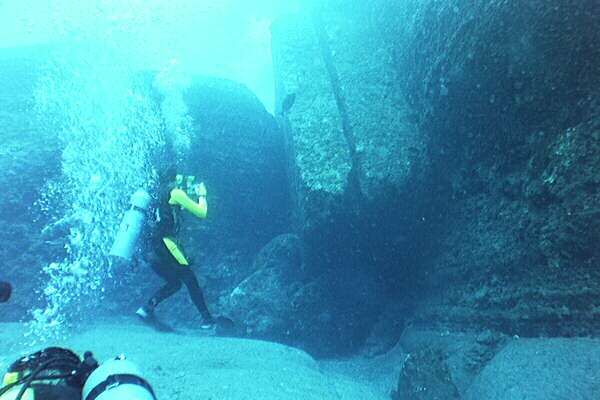
During my own research on the Yonaguni Monument, one of the first things I found is that the structure is, as far as I could determine, composed entirely of solid “living” bedrock. No part of the monument is constructed of separate blocks of rock that have been placed into position. This is an important point, for carved and arranged rock blocks would definitively indicate a man-made origin for the structure – yet I could find no such evidence.
During my initial two dives of September 1997 I was unable to determine, even in a general way, the stone of which the Yonaguni Monument is composed. This was due to the fact that the surfaces of the rocks are covered by various organisms (algae, corals, sponges, and so forth) that obscure the actual surfaces. I believe that this coating of organic material tends to make the surfaces of the Yonaguni Monument appear more regular and homogeneous than they actually are. This, in part, enhances the impression that this must be an artificial, man-made structure.
On some of my later dives I spent time scraping the organisms off the rocks in several places, so as to gain views of the actual rock faces, and also brought some samples of the rock to the surface. The Yonaguni Monument is composed predominantly of medium to very fine sandstones and mudstones of the Lower Miocene Yaeyama Group (the rocks themselves were deposited about 20 million years ago).
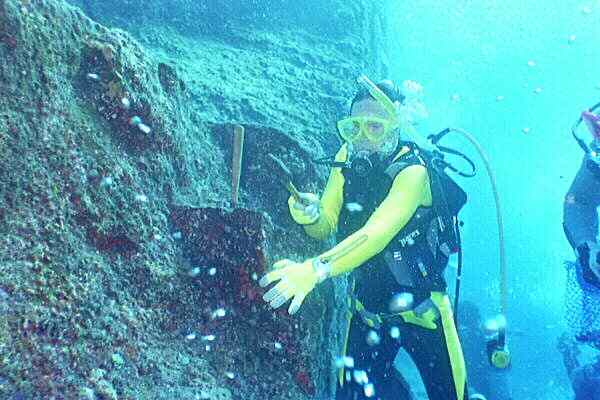
Copyright 1999 Dr. Robert M. Schoch
These rocks contain numerous well-defined, parallel bedding planes along which the layers easily separate. The rocks of this group are also criss-crossed by numerous sets of parallel and vertical (relative to the horizontal bedding planes of the rocks) joints and fractures. Yonaguni lies in an earthquake-prone region; such earthquakes tend to fracture the rocks in a regular manner.
The more I compared the natural, but highly regular, weathering and erosional features observed on the modern coast of the island with the structural characteristics of the Yonaguni Monument, the more I became convinced that the Yonaguni Monument is primarily the result of natural geological and geomorphological processes at work.
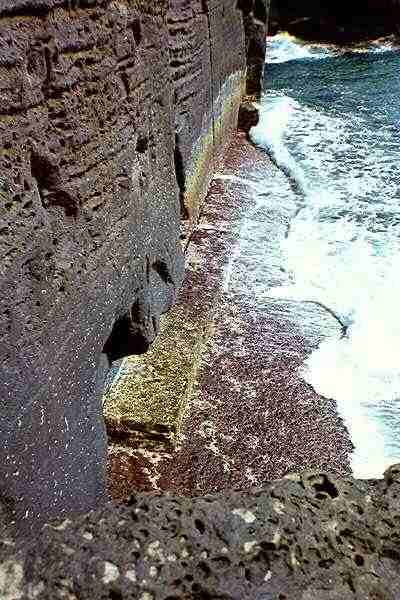
On the surface I also found depressions and cavities forming naturally that look exactly like the supposed “post holes” that some researchers have noticed on the underwater Yonaguni Monument. I have also spent a fair amount of time traveling the length and breadth of Yonaguni Island so as to examine and gain an understanding of the local geology and geomorphology of the island.
Copyright 1999 Dr. Robert M. Schoch
Along the southeast and northeast coasts of Yonaguni Island the Yaeyama Group sandstones are abundantly exposed, and here I could observe them weathering and eroding under current conditions.
I became convinced that presently, at the surface, natural wave and tidal action is responsible for eroding and removing the sandstones in such a way that very regular step-like and terrace-like structures remain.
In fairness to Dr. Kimura’s position, I must point out that he believes that at least some of the surface features that I here interpret as the result of natural weathering and erosion are either man-made or were modified by humans. However, I could not find any surface evidence (such as tool marks on the rock surfaces or carved blocks that had been moved into place) that, in my opinion, would substantiate his contention of artificiality.
Of course, I have had only a very short time to search for such evidence, and just because I did not find it does not mean it does not exist. However, at this time based on my own findings and analysis, I cannot agree with Dr. Kimura’s conclusion that the Yonaguni Monument is primarily a man-made structure.
My current working hypothesis is that the Yonaguni Monument is primarily of natural origin; that is, its overall structure is the result of natural geological and geomorphological processes. I think it should be considered a primarily natural structure until more evidence is found to the contrary. However, by no means do I feel that this is an absolutely closed case. The question of its genesis – artificial versus natural – may not be an all or nothing question.
Copyright 1999 Dr. Robert M. Schoch
We should also consider the possibility that the Yonaguni Monument is fundamentally a natural structure that was utilized, enhanced, and modified by humans in ancient times.
The Yonaguni Monument may even have been a quarry from which blocks were cut, utilizing natural bedding, joint, and fracture planes of the rock, and thence removed for the purpose of constructing other structures which are long since gone.”
Dr Robert M. Schoch’s Yonaguni
investigation continues on
page three
compare Dr Schoch’s views on the
Yonaguni structure with
the radically different views
of Prof. Masaaki Kimura
read Dr Schoch’s views on the
ancient rainwater-erosion controversy
of Egypt’s Great Sphinx
Further reading about the Yonaguni monument
and Ice Age civilisation as recommended by
Dr Robert M. Schoch
…
Barot, Trushar, 1998. “Divers find world’s oldest building.” The Sunday Times, London, (26 April 1998), page 4.
Hancock, Graham, and Faiia, Santha, 1998,
Heaven’s Mirror: Quest for the Lost Civilization” London: Michael Joseph.
Joseph, Frank, 1997, “Underwater City found near Japan” Ancient America, vol. 3, #17 (March/April 1997), pp. 2-6.
Minamiyama, Hiroshi, 1997, “Bottom of the Ocean Ooparts [Out of Place Artifacts]”. Tokyo: Futami Shobo, Publisher. 302 pages. ISBN 4-576-97087-9. [In Japanese. The Yonaguni Monument and related structures are discussed on pp. 11-46.]
Schoch, Robert M., with McNally, Robert Aquinas 1999,
“Voices of the Rocks: A Scientist Looks at Catastrophes and Ancient Civilizations” New York: Harmony, Crown Publishing Group, Random House. The recently updated
(UK edtion) is now also available worldwide …
History’s Mysteries
“Do undersea relics near Okinawa offer proof of a sophisticated civilization during the last ice age?
Archeologists have long believed that civilization as they define it — intelligent, tool-making, monument building, social humans — began about 5,000 years ago.
But submerged beneath the waves near the Japanese island of Yonaguni is evidence that may well overturn that long-held theory.
A small but persuasive number of scholars and scientists have long thought that “advanced” societies may have existed as long as 10,000 years ago.
Their theories, however well reasoned and defended, have been hamstrung by a lack of evidence.
But recent discoveries of man-made artifacts on the Pacific seafloor may well prove to be the smoking gun that will propel this alternative view of civilization to prominence”.
see the evidence with ‘unique underwater footage’
of the various Yonaguni structures in the
‘History Channel’ TV programme
“Japan’s Mysterious Pyramids”
DVD
or
VHS
|
|
Books about the ancient Jomon of prehistoric Japan
“Ancient Jomon of Japan”
by
Junko Habu
Get This Book From:
Amazon.com
Amazon.co.uk
“Prehistoric Japan:
New Perspectives on Insular East Asia”
by
Keiji Imamura
Get This Book From:
Amazon.com
Amazon.co.uk
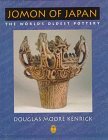
“Jomon of Japan: The World’s Oldest Pottery”
by
Douglas Moore Kenrick
Get This Book From:
Amazon.com
Amazon.co.uk
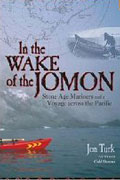
“In the Wake of Jomon: Stone Age Mariners and a Voyage Across
the Pacific”
by
Jon Turk
Get This Book From:
Amazon.com
Amazon.co.uk
“An Archaeological History of Japan, 30,000 B.P. to A.D. 700”
by
Koji Mizoguchi
Get This Book From:
Amazon.com
Amazon.co.uk
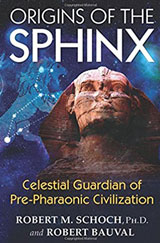
“Origins of the Sphinx:
Celestial Guardian of Pre-Pharaonic Civilization”
by
Robert M. Schoch Ph.D.
and
Robert Bauval
Get This Book From:
Amazon.com
Amazon.co.uk
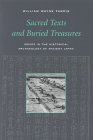
“Sacred Texts and Buried Treasure:
Issues on the Historical Archaeology of
Ancient Japan”
by
William Wayne Farris
Get This Book From:
Amazon.com
Amazon.co.uk
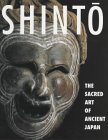
“Shintao: The Sacred Art of Ancient Japan”
by
Victor Harris
(Editor)
Get This Book From:
Amazon.com
Amazon.co.uk
Books About
Marine Archaeoloy
“Basic Decompression Theory and Application, Second Edition”
by
Bruce R. Wienke

Get This Book From:
Amazon.com
Amazon.co.uk
“Underworld: Flooded Kingdoms
of the Ice Age”
by
Graham Hancock
Get This Book From:
Amazon.com
Amazon.co.uk
|